Food & Clinical Nutrition for Health
Seeks the development of foods that prevent and combat obesity and other comorbidities associated with metabolic syndrome.
What does this unit do?
It selects the varieties of plant, animal, and single-celled species relevant to a diverse, healthy, and sustainable diet. Additionally, the interactions among nutrients and other chemical compounds during food processing, storage, and digestion are validated to design better foods for different populations.
Healthy Food
In Mexico, healthy food production is very variable due to the wide range of climatic conditions and migratory movements that have occurred and continue to occur in the national territory. On the one hand, traditional production systems focus on the diversity of vegetable crops and collecting local fruits and seeds that encourage a diverse diet. On the other hand, in some regions of the country, there is a greater degree of technology to increase the yield and quality of food, advancing the fulfillment of Sustainable Development Goal #2 (SDG 2): zero hunger. Finding a balance in these approaches would move us toward fulfilling SDG 12: Responsible production and consumption.
Your food is your medicine
For centuries, it has been recognized that the consumption of healthy foods has a close relationship with good health in the present and future. Today there is a wealth of scientific evidence supporting the prevention of non-communicable diseases.
Hippocrates' phrase "Let your food be your medicine and your medicine your food" leads to three grand challenges:
- How to design food for population groups already suffering from certain chronic-degenerative diseases?
- How to design foods that help prevent these diseases?
- Understanding the reactions between a food's components and an individual's state of health
Currently, there are advances in understanding nutritional needs and the relevance of consuming antioxidant compounds, immunostimulants, and other beneficial health effects, but further research is required to support each individual to make the best choice based on their habits, customs, traditions, and specific needs. That is one of the challenges of this unit.
Meet the researchers
* About Research Professors; They are principal investigators (PIs) who dedicate 75% of their time to research and 25% of their time to faculty (teaching) activities in the school they are assigned at Tecnológico de Monterrey (in IOR’s case, either the School of Medicine, School of Engineering, or School of Government).

Dr. Carmen Hernández Brenes
Unit leader. Research Professor
Applied Metabolomics for Better Nutrition and Health.
Get to know her work
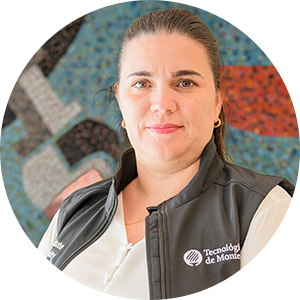
Dr. Marilena Antunes Ricardo
Research Professor
Characterization of phytochemicals in plant matrices for the development of health foods with immunoeoeutical and/or cosmetic potential.
Get to know her work

Dr. Anayansi Escalante Aburto
Research Professor
Characterization of nutraceutical foods of plant origin. Nutrition, eating habits, and health.
Get to know her work

Dr. Iván Andrés Luzardo Ocampo
Research Professor
Functional foods based on cereals and legumes. In vitro, ex vivo, in vivo, and in silico approaches to study the effect of food matrices and metabolites in models of inflammation and obesity.
Get to know her work

Dr. Paola Abril Campos Rivera
Research Professor
PhD in Public Health. Specialist in design and implementation of public policies for health.
Get to know her work
Postdoctorals researchers
Dr. Benjamín Vázquez Rodríguez
- Application of metabolomics for the design of bioingredients and functional foods, characterizing how naturally sourced compounds modulate the gut microbiota as a comprehensive strategy against obesity
Dr. Arturo Alejandro Mayorga Martínez
- Machine learning and other artificial intelligence tools for food design and analysis
Dr. Alejandra González Moreno
- Food systems
- Food security
- Social determinants of nutrition
Dr. Shirley María Mora Godinez
- Integration of omics for research in human health and biotechnology
Latest Works and Publications of the Institute
Essential Oils: Recent Advances on Their Dual Role as Food Preservatives and Nutraceuticals against the Metabolic Syndrome
The Role of Probiotics in Dairy Foods and Strategies to Evaluate Their Functional Modifications
Effect of the Enzymatic Treatment of Phenolic-Rich Pigments from Purple Corn (Zea mays L.): Evaluation of Thermal Stability and Alpha-Glucosidase Inhibition
In vitro Evaluation of Anti-Inflammatory Activity of "Habanero" Chili Pepper (Capsicum chinense) Seeds Extracts Pretreated with Cellulase
Immunomodulatory and Antioxidant Effects of Spray-Dried Encapsulated Kale Sprouts after In Vitro Gastrointestinal Digestion
Consumer perception of insects as food: Mexico as an example of the importance of studying socio-economic and geographical differences for decision-making in food development
Fighting Obesity-Related Micronutrient Deficiencies through Biofortification of Agri-Food Crops with Sustainable Fertilization Practices
Biopolymer nanoparticles: a strategy to enhance stability, bioavailability, and biological effects of phenolic compounds as functional ingredients
Challenges and Strategies for Topical and Transdermal Delivery of Bioactive Peptides
Engineering and Evaluation of Forcespun Gelatin Nanofibers as an Isorhamnetin Glycosides Delivery System
Meet the other units